All Capabilities
S-01
Capability 01 / 04
Intelligence (AI)
Most AI never leaves the notebook. We build the other kind — systems that hold up under real traffic, real data drift, and real users who never read the manual.
// 01
What You Can Deploy
Engagements, not brochures.
04 OFFERS
P-01
Grounded Answer Engine
6–8 weeks to pilot
Cites its sources
Eval harness included
A retrieval-augmented assistant over your own documents, tickets, or catalogue — every answer traceable to a source passage, with an evaluation set that proves accuracy before it reaches a customer.
P-02
Decision Model
Champion vs. challenger
Wired into the workflow
Measured lift
Forecasting, ranking, or scoring wired directly into the workflow it is meant to change — pricing, credit, inventory, or routing — with a champion/challenger setup so its value is measured, not asserted.
P-03
Vision Inspection
Trained on your data
Edge or cloud
Human-in-the-loop
Detection and classification trained on your imagery and your lighting, deployed to edge or cloud, with a human-review loop for the low-confidence tail instead of silent mistakes.
P-04
AI Readiness Audit
2–3 weeks
Fixed scope
Build-or-stop call
A short, unsentimental engagement: what your data can actually support, which use cases clear the value bar, what they cost to run, and the order to build them in.

// 02
Inside the Discipline
What we actually do here.
01
LLM & Agent Systems
Retrieval pipelines, tool-using agents, and guardrails that keep answers grounded in your data instead of the model's imagination.
02
Embedded AI Systems
Models that run on the device rather than in a data centre — quantised to fit real compute, memory, and power budgets, and to keep working when the network does not.
03
Predictive Intelligence
Forecasting, ranking, and recommendation models connected to the decisions they inform, rather than parked in a dashboard nobody opens.
04
Graph & Connected Data
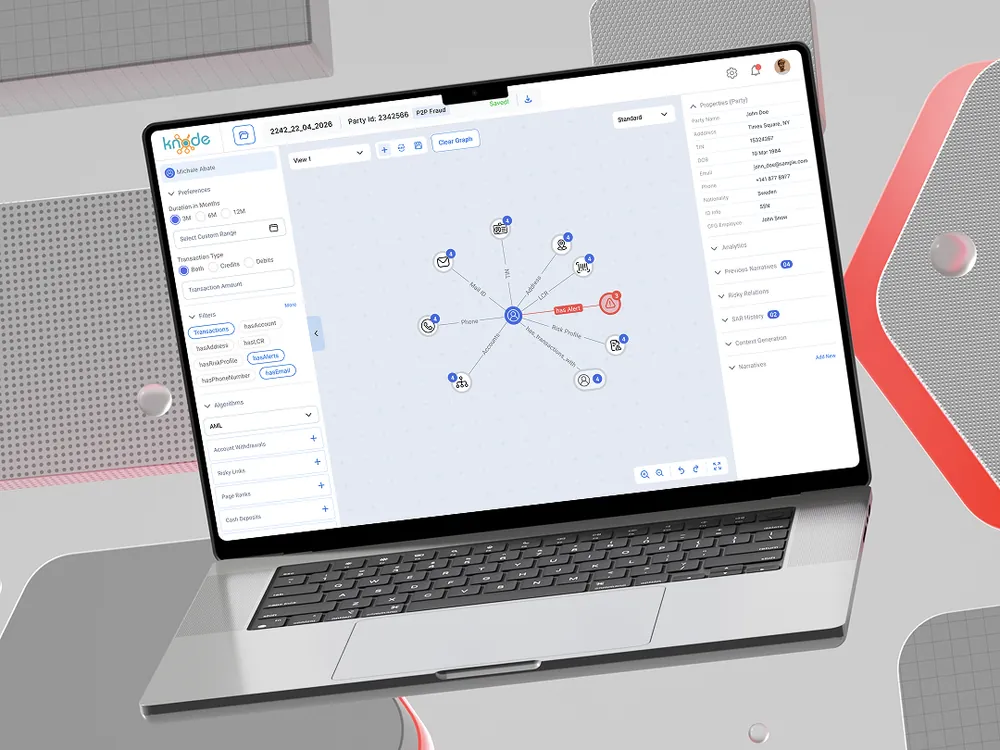
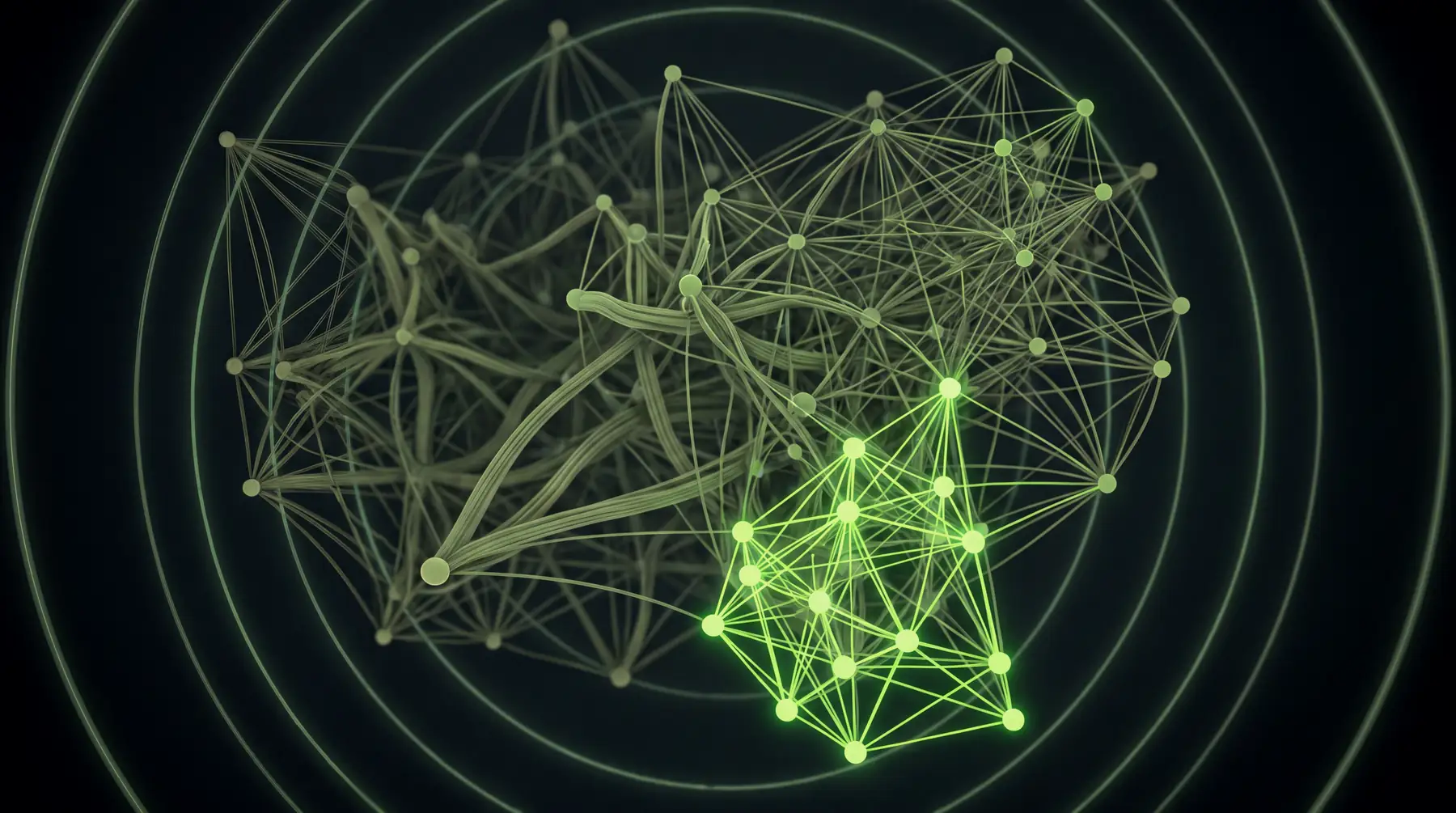
Relationship-first modelling on graph infrastructure, so questions about who connects to what stay fast at billions of edges.
05
Evaluation & Guardrails
Golden datasets, regression suites, and refusal behaviour — the difference between a model you demo and a model you deploy.
// 03
Case Studies
Decisions we have already made the hard way.
03 STUDIES
// 04
Where It Applies
Applications in the field.
The same discipline, pointed at different problems. These are the shapes this work most often takes.
01
Financial Services
Credit scoring, fraud pattern detection, and document extraction across KYC packets.
02
Commerce
Demand forecasting, personalised ranking, and automated catalogue enrichment.
03
Healthcare
Triage support, clinical document summarisation, and imaging pre-reads with human sign-off.
04
Logistics
Route and load optimisation, ETA prediction, and exception detection across the fleet.
05
Media
Auto-tagging, semantic archive search, and script and pre-visualisation assistance.
06
Internal Ops
Knowledge assistants over policy and process docs that cite the clause they answered from.

// 05
How It Runs
Four phases, in order.
01
Data Recon
Audit what data exists, what it truly contains, and whether the problem is learnable — before a line of model code is written.
02
Baseline & Bound
Ship the simplest thing that works, measure it honestly, and make it the bar every fancier approach has to clear.
03
Model & Harden
Iterate architecture and features against a held-out set, then stress the result with adversarial and edge-case inputs.
04
Deploy & Watch
Serve behind versioned endpoints with drift monitoring and a retraining path, so quality is observed rather than hoped for.
// 06 Toolkit
What we build with
PyTorch
Hugging Face
LangGraph
pgvector
Neo4j / Tessera DB
ONNX Runtime
Ray
MLflow
FastAPI
Docker