Intel / Learning Center
CH · COURSE
Free · video series
Chemistry for Inventors
Chemistry from first principles, with simple pictures, real-life examples, kitchen experiments and computer projects.
Learn chemistry like building with LEGO: first the bricks, then how they click, then how to build new things, and finally how to check with a computer and with Claude that your new thing really works.
Premieres soon
Watch on YouTube
M0
M1
M2
M3
M4
M5
M6
M7
M8
M9
27
Video lessons
10
Modules
2–5
Minutes each
Free
No sign-up
0 of 27 lessons live
0%
Next · 0.01 What Is a Chemical Bond? Why Atoms Stick Together — Thu 15 Oct · 6:30 PM IST
New lessons every day at 6:30 PM IST.
// 01
Who it's for
No code needed. Nothing skipped.
Anyone curious about chemistry, with no chemistry background needed. Built for inventors, students and engineers who want to work with AI on real molecules.
The promise
“By the last lesson you can read and write molecules, predict whether a reaction will happen and how fast, and check what you made. No chemistry background needed.”
// 02
How every lesson works
01
One idea per lesson
Each lesson teaches one idea, with the logic built up in small steps.
02
Simple picture first
Every lesson starts with a story anyone could follow.
03
Where you see it
Real things in your life that work because of this idea.
04
Try it
A kitchen experiment or a computer project.
05
Check yourself
A few questions. If you can explain the answers to a friend, move on.
// 03
What you'll learn
Seven modules, from your first prompt to teams of agents.
Release schedule
Mon · Wed · Fri · Sun
6:30 PM IST
Subscribe on YouTube to get each lesson the moment it goes live.
// 04
Curriculum
Every lesson, in order.
00 / 27 LIVE
Module 0 · 2 lessons
Why atoms stick
What holds the world together?
0/2 live
Opens Thu 15 Oct · 6:30 PM IST
Next up
Thu 15 Oct · 6:30 PM IST
What Is a Chemical Bond? Why Atoms Stick Together
Why do atoms stick together? This lesson builds the answer from first principles, one small step at a time, with no chemistry background needed: what an atom is, why its electrons don't crash into the
Coming
16 Oct
The Periodic Table Explained From One Idea
Why does sodium give electrons away, chlorine grab them, and neon refuse to react? This lesson rebuilds the periodic table from one question, how hard an atom pulls on its outermost electrons, with no
Module 1 · 4 lessons
The language of molecules
How do I write and read a molecule?
0/4 live
Opens Sat 17 Oct · 6:30 PM IST
Coming
17 Oct
How Many Bonds Can an Atom Make? The Stud Rule and Lewis Structures
How many bonds can an atom make? This lesson gives you one rule that answers it for the atoms of life: the number of bonds an atom makes equals the number of electrons it is missing from a full outer
Coming
18 Oct
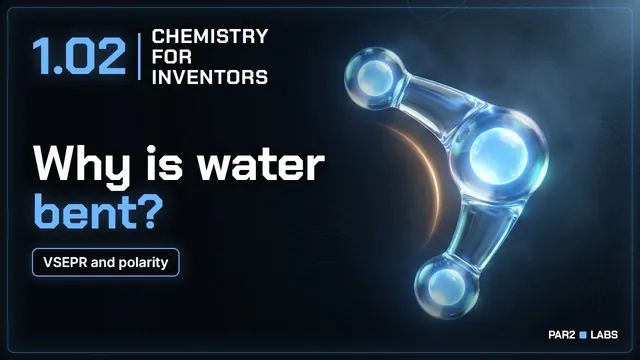
Molecular Shape Explained: VSEPR, Polarity and Why Water Is Bent
Why is water bent while carbon dioxide is straight? This lesson builds molecular shape from one idea: electron pairs are all negative, so they push each other as far apart as they can.
Coming
19 Oct
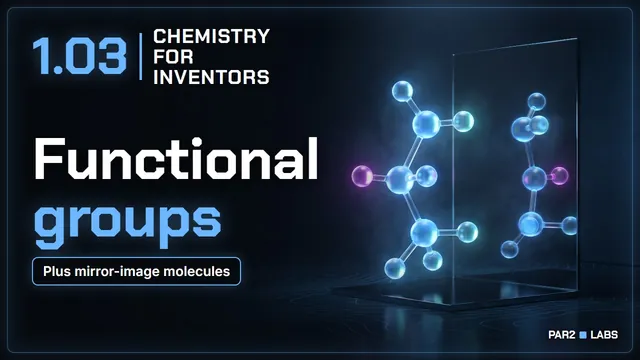
Functional Groups and Chirality: The Parts That Predict How Molecules Behave
How can you guess how a molecule behaves without memorising millions of them? Learn its parts.
Coming
20 Oct
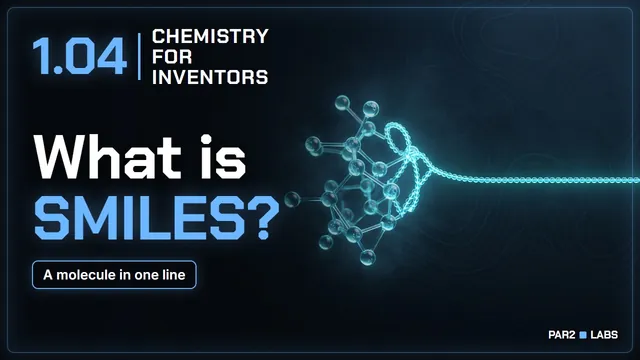
SMILES Explained: Write Any Molecule as One Line of Text
How do you type a molecule into Claude or into chemistry software? With SMILES, a way to write any molecule as one line of text.
Module 2 · 3 lessons
Mixing, melting, sticking
Why do oil and water not mix?
0/3 live
Opens Wed 21 Oct · 6:30 PM IST
Coming
21 Oct
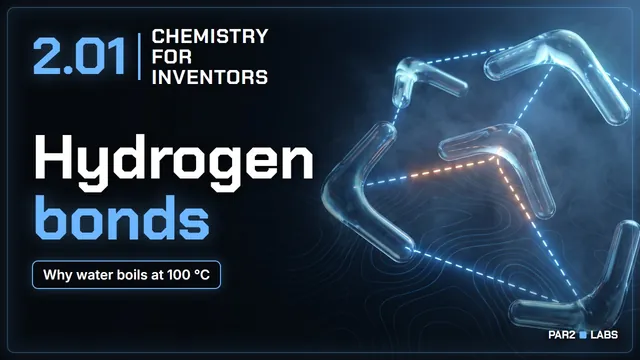
Intermolecular Forces and Hydrogen Bonds: Why Water Boils at 100 °C
Why does water boil at 100 °C, when ethane, a molecule about the same size, boils at −89 °C? This lesson explains intermolecular forces from first principles, with a party picture you can remember: po
Coming
22 Oct
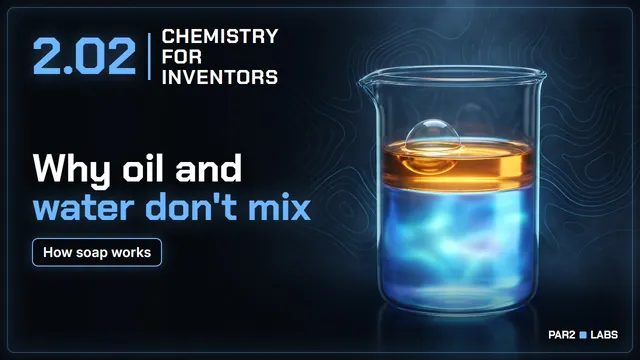
Why Oil and Water Don't Mix: The Hydrophobic Effect and How Soap Works
Why don't oil and water mix? It isn't that they hate each other.
Coming
23 Oct
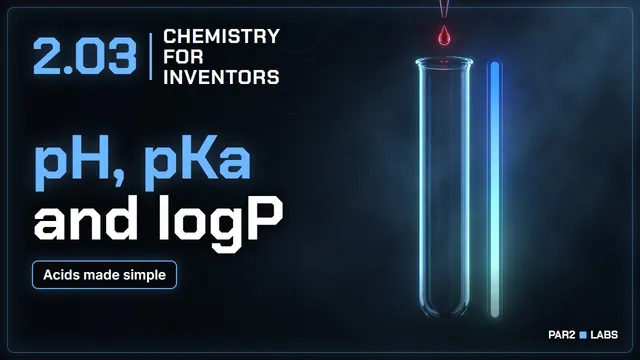
pH, pKa and logP Explained: Acids and the Oil-or-Water Score
What do pH, pKa and logP actually mean? This lesson explains the two numbers every chemist uses, from first principles.
Module 3 · 3 lessons
What wants to happen
Will this reaction go by itself?
0/3 live
Opens Sat 24 Oct · 6:30 PM IST
Coming
24 Oct
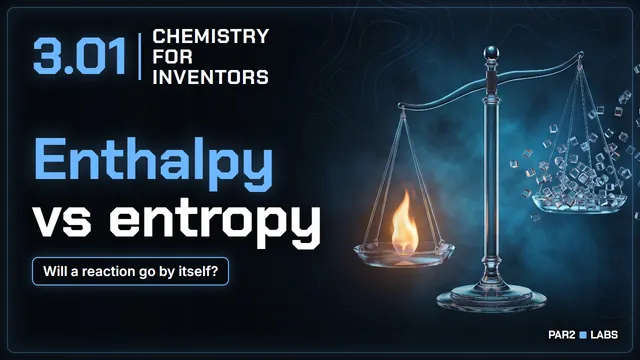
Enthalpy and Entropy Explained: Will a Reaction Happen by Itself?
Will a reaction happen by itself? Two simple rules decide: balls roll downhill, and kids' rooms get messy.
Coming
25 Oct
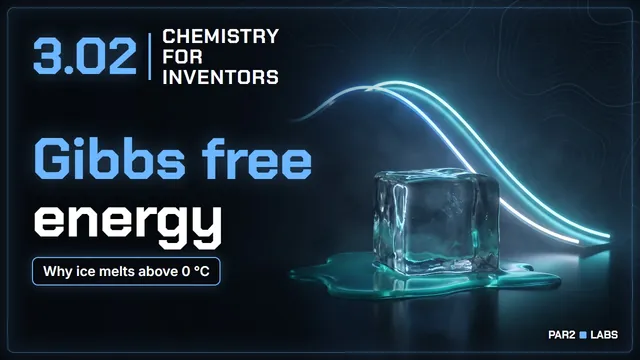
Gibbs Free Energy and Equilibrium: Why Ice Melts Above 0 °C
Why does ice melt above 0 °C and freeze below it? This lesson adds the two drives of chemistry, giving off heat and spreading out, into one score: the Gibbs free energy change, ΔG = ΔH − TΔS, said in
Coming
26 Oct
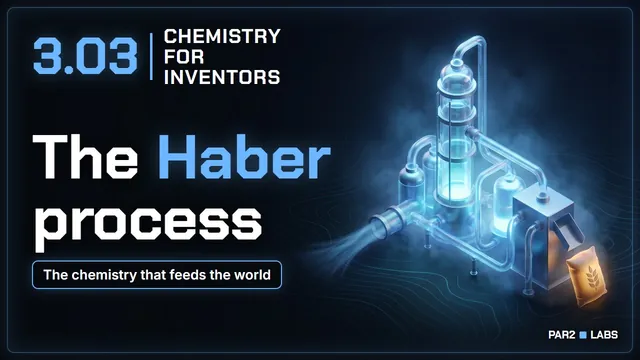
The Haber Process: The Chemistry That Feeds Half the World
Air is 78% nitrogen, but plants can't use it: they need ammonia.
Module 4 · 2 lessons
How fast it happens
Will it happen in a second or a century?
0/2 live
Opens Tue 27 Oct · 6:30 PM IST
Coming
27 Oct
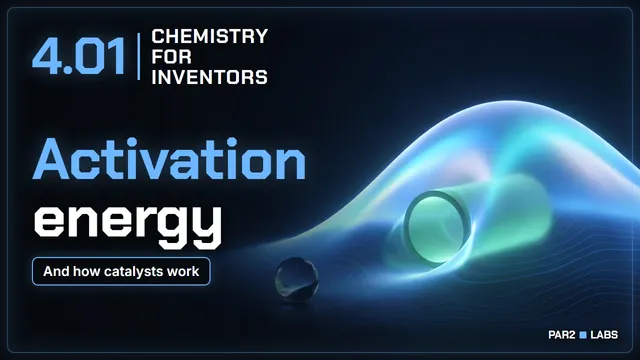
Activation Energy and Catalysts: Seconds or Centuries?
Why does milk go off in days but a diamond lasts forever? Every reaction has to climb a hill before it can roll downhill, and the height of that hill, the activation energy, decides whether it takes a
Coming
28 Oct
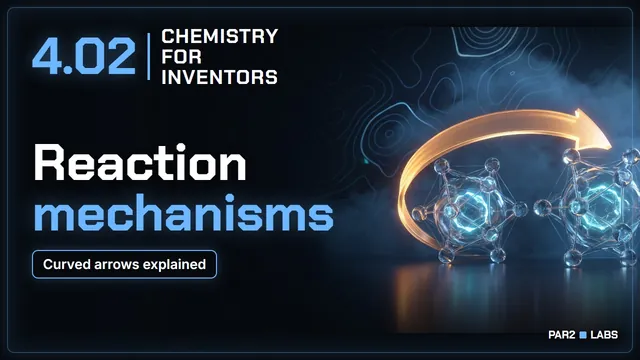
Reaction Mechanisms: Curved Arrows, Nucleophiles and Electrophiles
What actually happens during a chemical reaction? Electrons move, and chemists draw every move with a curved arrow.
Module 5 · 3 lessons
The recipe book
How do chemists build new molecules?
0/3 live
Opens Thu 29 Oct · 6:30 PM IST
Coming
29 Oct
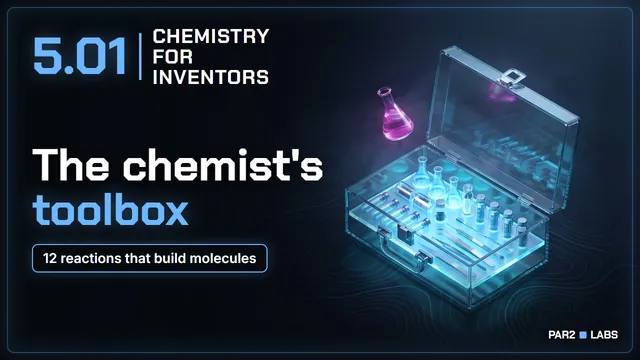
The Chemist's Toolbox: A Dozen Reactions That Build Most Molecules
How do chemists build new molecules? Not by inventing a new method every time.
Coming
30 Oct
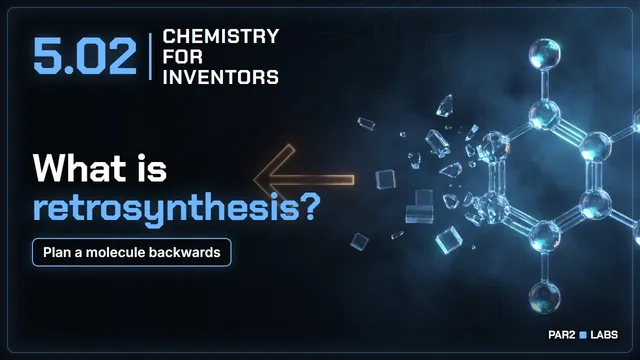
Retrosynthesis: How Chemists Plan a Molecule Backwards
How do chemists plan a new molecule? Backwards, like planning a cake from the finished cake back to the shop.
Coming
31 Oct
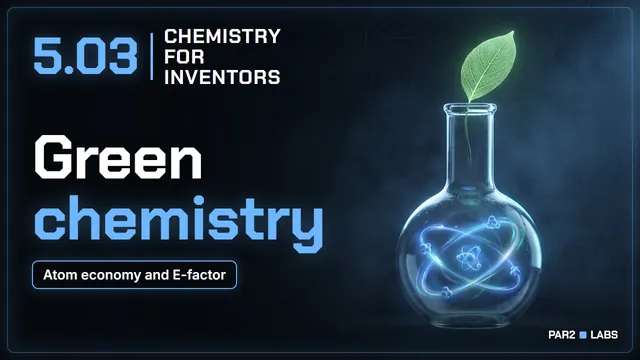
Green Chemistry: Atom Economy and the E-Factor
How wasteful is a chemical recipe? Green chemistry gives two simple scores.
Module 6 · 2 lessons
Proving what you made
How do I know what is in the bottle?
0/2 live
Opens Sun 1 Nov · 6:30 PM IST
Coming
1 Nov
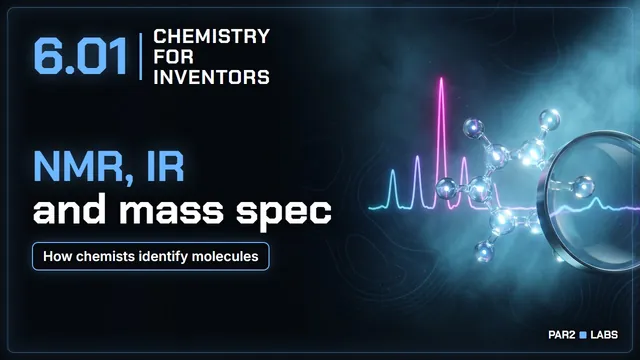
How Chemists Identify Molecules: Mass Spec, IR and NMR
Nobody has ever looked at a molecule and simply seen it.
Coming
2 Nov
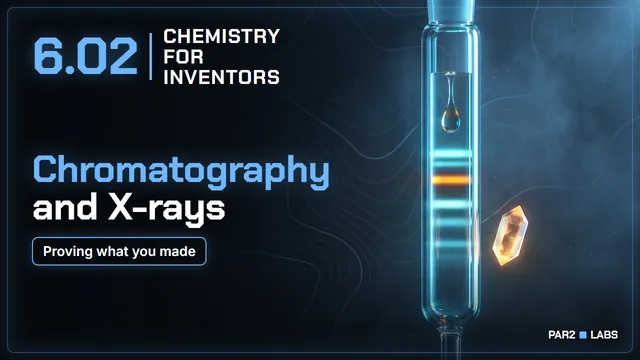
Chromatography, X-Ray Crystallography and Purity
How do you prove your sample is pure, and find exactly where every atom sits? This lesson explains four tools in plain words: chromatography races a mixture apart to count what's in it, X-ray crystall
Module 7 · 3 lessons
Playing with molecules on the computer
Can I test it before I make it?
0/3 live
Opens Tue 3 Nov · 6:30 PM IST
Coming
3 Nov
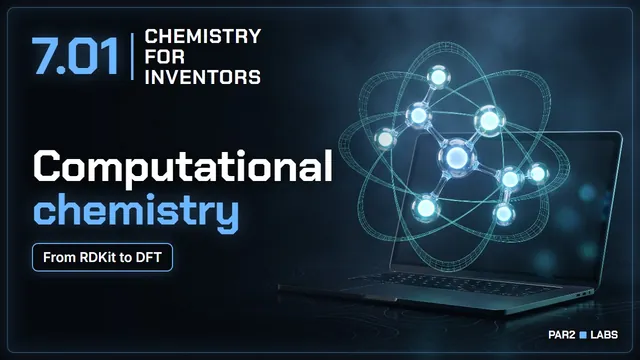
Computational Chemistry Explained: From RDKit to DFT
A computer can predict how molecules behave before you make them, but every method trades accuracy for speed.
Coming
4 Nov
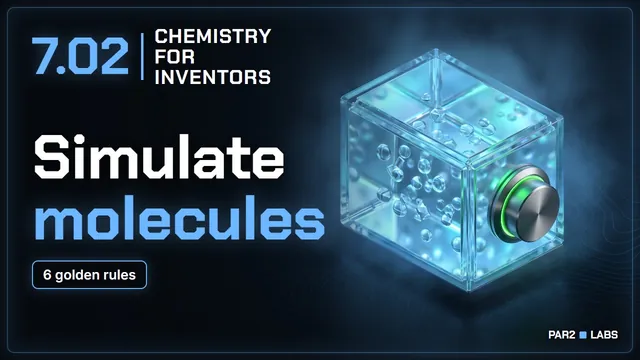
How to Simulate Molecules Without Fooling Yourself: 6 Golden Rules
Running a molecular simulation is easy; getting a number you can trust is the hard part.
Coming
5 Nov
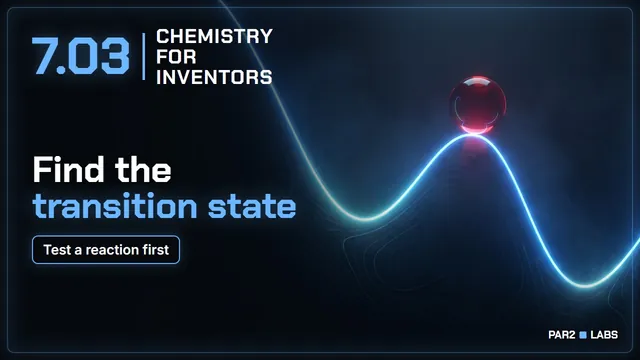
Finding a Transition State: Test a Reaction Before You Make It
If you can find the top of a reaction's hill, the transition state, you can tell whether a reaction will work, and how fast, before you touch any chemicals.
Module 8 · 2 lessons
Solids and materials
Why is metal shiny and glass clear?
0/2 live
Opens Fri 6 Nov · 6:30 PM IST
Coming
6 Nov
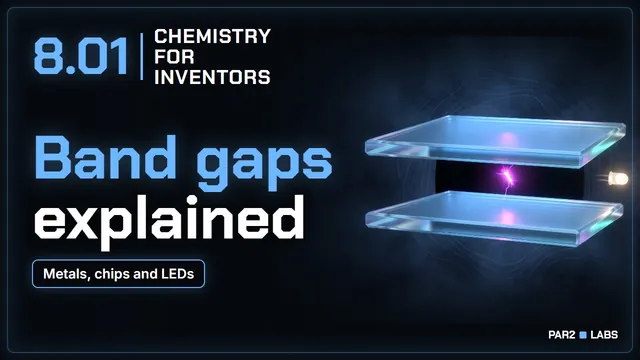
Band Gaps Explained: Metals, Semiconductors, Insulators and LEDs
Why is a metal spoon shiny, glass clear, and silicon the heart of every computer chip? This lesson builds the answer from one idea: when trillions of atoms join into a solid, their fixed electron ener
Coming
7 Nov
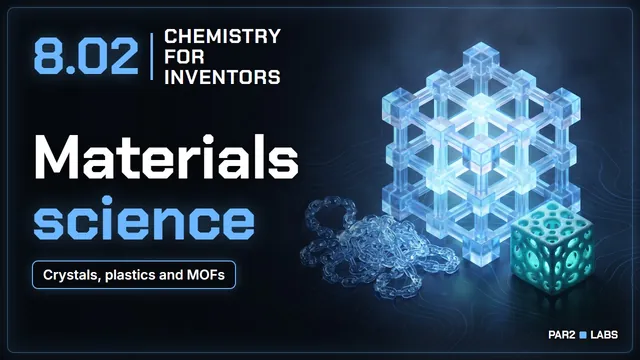
Materials Science Basics: Crystals, Defects, Plastics and MOFs
Why does a paperclip bend but a salt crystal crack? How does a missing atom let your phone battery charge? This lesson is materials science from first principles: atoms in metals stacked like oranges
Module 9 · 3 lessons
Inventing with Claude
How do I create something new that works?
0/3 live
Opens Sun 8 Nov · 6:30 PM IST
Coming
8 Nov
Inventing Molecules With AI: The Design Loop
Claude can suggest new molecules in seconds, and sometimes it makes things up with a straight face.
Coming
9 Nov
10 Ways AI Chemistry Goes Wrong and How to Catch Each One
AI can be wrong about chemistry with total confidence.
Coming
10 Nov
Your First Invention: Final Projects and Prompts for Claude
The last lesson of Chemistry for Inventors: your first invention with AI.
New lessons every week
Learn what the model sees.
27 free lessons on the PAR2 LABS YouTube channel. New lessons every day at 6:30 PM IST.