Intel / Learning Center
QP · COURSE
Free · video series
Quantum Physics for Inventors
Quantum physics from first principles, from the sandcastle down to the quantum computer.
Why do sand, chips, LEDs and lasers all depend on rules that Newton never wrote? No quantum knowledge needed.
Premieres soon
Watch on YouTube
M0
M1
M2
M3
M4
M5
M6
M7
M8
M9
M10
106
Video lessons
11
Modules
2–5
Minutes each
Free
No sign-up
0 of 106 lessons live
0%
Next · 0.01 Why Quantum Physics? The Rules of the Very Small — Wed 11 Nov · 6:30 PM IST
New lessons every day at 6:30 PM IST.
// 01
Who it's for
No code needed. Nothing skipped.
Anyone curious about quantum physics, with no prior knowledge needed. Each lesson can be followed by a non-physicist, and the precise part is there for engineers.
The promise
“By the last lesson you can explain the rules of the very small, how qubits and quantum computers work, and what they can and cannot do.”
// 02
How every lesson works
01
The simple picture
Every lesson opens with a picture anyone can follow.
02
The logic chain
Then the reasoning in small steps, with each term explained as it appears.
03
Where you see it
Real things in your life that depend on this idea.
04
Try it
A free simulation or a few lines of Python in your browser.
05
Check yourself
A few questions. If you can explain the answers to a friend, move on.
// 03
What you'll learn
Seven modules, from your first prompt to teams of agents.
Release schedule
Mon · Wed · Fri · Sun
6:30 PM IST
Subscribe on YouTube to get each lesson the moment it goes live.
// 04
Curriculum
Every lesson, in order.
00 / 106 LIVE
Module 0 · 8 lessons
The toolkit
Waves, interference, energy, probability, arrows and matrices: the few tools every later lesson uses.
0/8 live
Opens Wed 11 Nov · 6:30 PM IST
Next up
Wed 11 Nov · 6:30 PM IST
Why Quantum Physics? The Rules of the Very Small
Why do sand, chips, LEDs and lasers all depend on rules that Newton never wrote? This first lesson zooms from a sandcastle down to the atom and shows exactly when the old rules stop working.
Coming
12 Nov
Waves Explained: Wavelength, Frequency and Speed
Is a wave a thing that moves, or a wiggle that moves? Start with a duck in a bathtub and a rope tied to a door, then build the exact wave rule: speed equals frequency times wavelength.
Coming
13 Nov
Wave Interference Explained: Why Waves Cancel
Two waves meet.
Coming
14 Nov
Energy, Force and Motion: The Energy Landscape Idea
Why does a ball roll down and never up by itself? This lesson builds kinetic energy, potential energy, conservation of energy and the energy landscape, the picture that will later explain atoms, molec
Coming
15 Nov
Probability Explained: How Much of the Time
How can a die be unpredictable and predictable at the same time? Roll it 600 times and the picture appears.
Coming
16 Nov
Vectors for Beginners: Adding Arrows and the Dot Product
How far are you from the start if you walk 3 steps east and 4 steps north? Draw an arrow and the answer is 5.
Coming
17 Nov
Complex Numbers Explained as Spinning Arrows
Can a number go round like a clock hand? Yes.
Coming
18 Nov
Matrices Explained as Machines That Turn Arrows
A matrix is just a toy that turns, flips or stretches every arrow on a page, and four numbers are enough to describe it.
Module 1 · 7 lessons
The crisis
The experiments that broke classical physics, and how the quantum rules were forced out of them.
0/7 live
Opens Thu 19 Nov · 6:30 PM IST
Coming
19 Nov
Blackbody Radiation and Planck's Constant Explained
A hot poker glows red, then white.
Coming
20 Nov
Photoelectric Effect Explained: Why Light Comes in Photons
Shine a bright red lamp on a metal plate and nothing happens.
Coming
21 Nov
Atomic Spectra and the Bohr Model Explained Simply
Why does a neon sign glow orange-red while a hot poker glows every colour? Atoms emit only certain colours of light, and by classical physics an orbiting electron should spiral into the nucleus in pic
Coming
22 Nov
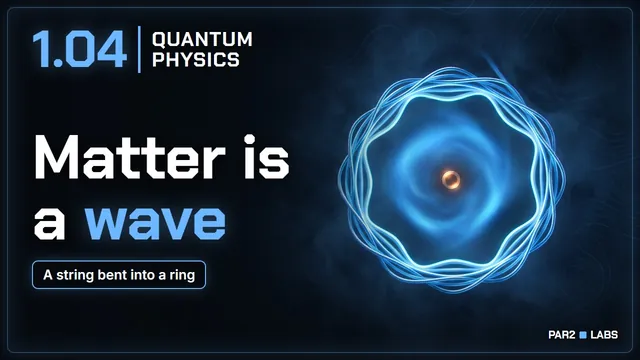
de Broglie Matter Waves: Why Electrons Act Like Waves
Louis de Broglie asked a daring question in 1924: if light waves can act like particles, can particles act like waves? This lesson shows the answer, the wavelength lambda equals h divided by momentum,
Coming
23 Nov
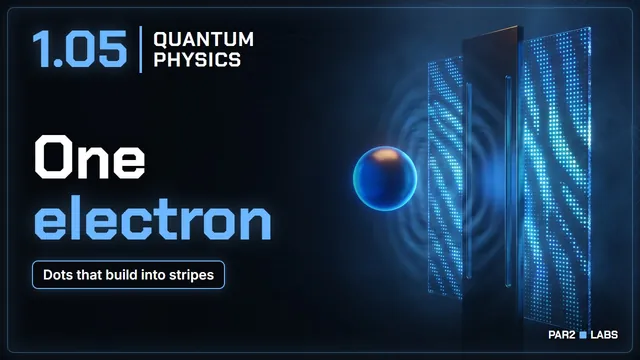
Double-Slit Experiment Explained: One Electron at a Time
Fire electrons one at a time at two slits: each lands as a single dot, yet thousands of dots build up zebra stripes.
Coming
24 Nov
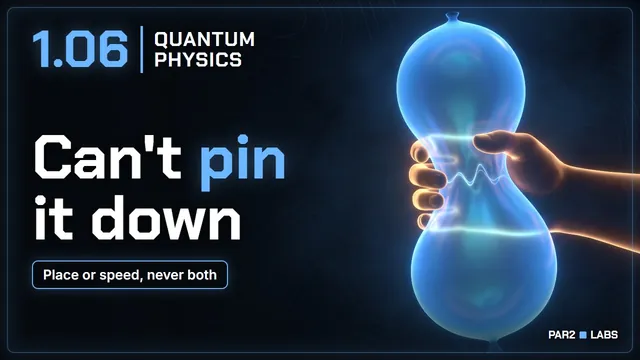
Heisenberg Uncertainty Principle Explained Simply
Why can't you know exactly where an electron is and exactly how fast it moves? It is not clumsy instruments: it is the shape of waves.
Coming
25 Nov
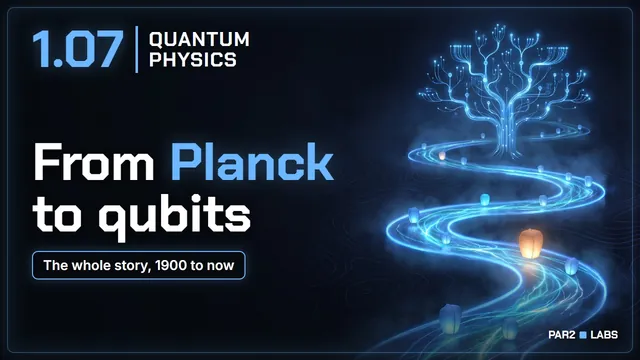
History of Quantum Physics: Planck to Quantum Computers
The whole story of quantum physics in one timeline, from Planck's packets of energy in 1900 to quantum error correction and the Nobel Prizes of 2012, 2022 and 2025.
Module 2 · 9 lessons
The rules
The working rules of quantum physics: states, superposition, measurement and the Schrödinger equation.
0/9 live
Opens Thu 26 Nov · 6:30 PM IST
Coming
26 Nov
Quantum State Explained: One Arrow Is Everything You Can Know
What do you say if you want to tell someone everything about one tiny atom? In quantum physics the answer is a single arrow of length one.
Coming
27 Nov
Superposition Explained: A Quantum State That Adds Up
Is a spinning coin heads or tails? A six-year-old says neither, and then quantum physics says something stranger.
Coming
28 Nov
Quantum Measurement and the Born Rule: Shadows Become Chances
Your hand throws a shadow on the wall; a quantum state throws shadows on the possible answers, and the squared shadow is the chance of each answer.
Coming
29 Nov
Observables in Quantum Mechanics: Questions as Machines
What if asking a toy 'what shape are you?' scrambles its colour? This lesson turns questions into matrix machines: eigenvalues are the answers, eigenstates are the arrows that give a sure answer, and
Coming
30 Nov
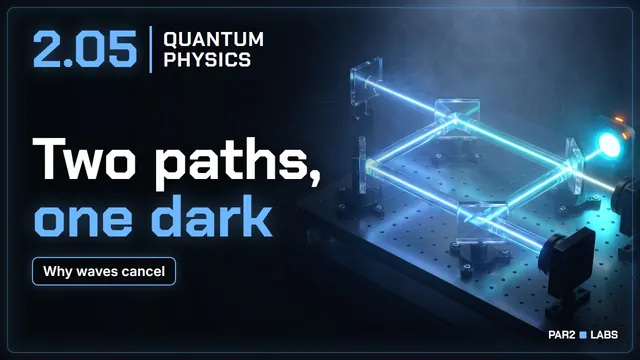
Quantum Interference Explained: Mach-Zehnder in 8 Minutes
Two kids push a swing in opposite ways and it stays still: that is interference.
Coming
1 Dec
Schrödinger Equation Explained: Quantum States Spin
A quantum state is not pushed around: it spins, and each energy spins at its own rate.
Coming
2 Dec
Quantum Spin Explained: Stern-Gerlach and the Half Angle
Why does a tiny magnet inside an electron answer only up or down, whichever way you ask? This lesson takes you through the Stern-Gerlach experiment, spin one half, the Pauli matrices, the cosine-squar
Coming
3 Dec
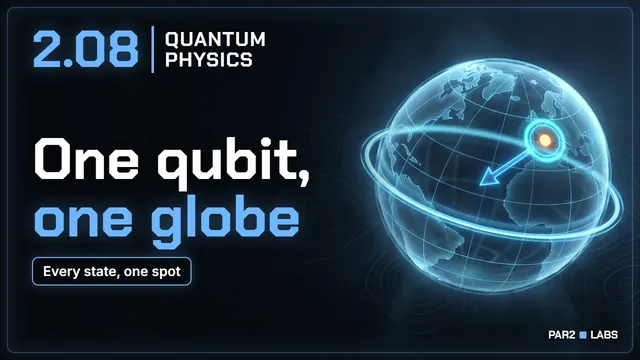
The Bloch Sphere Explained: A Globe for One Qubit
Every state of a two-outcome system fits on one globe: height gives the chances, longitude gives the relative phase, and every gate is a turn of the globe.
Coming
4 Dec
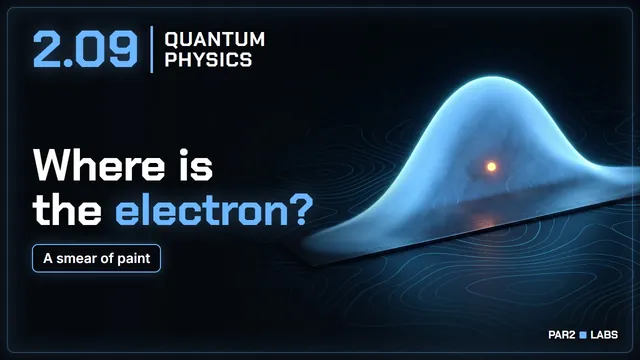
Wavefunction Explained: Position, Momentum and Uncertainty
Where is an electron? A smear of paint on a ruler, thick where you would likely find it.
Module 3 · 10 lessons
Solvable worlds
The simple systems solved exactly, a box, an oscillator and the hydrogen atom, and what they teach.
0/10 live
Opens Sat 5 Dec · 6:30 PM IST
Coming
5 Dec
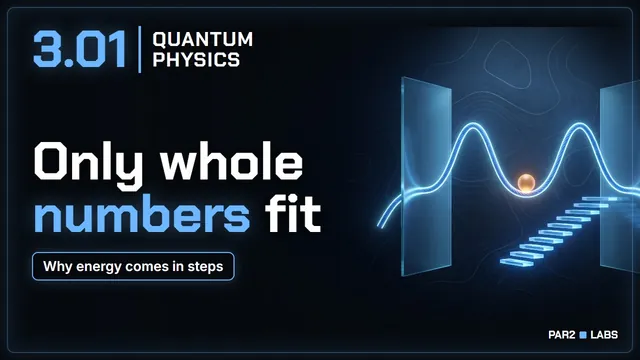
Particle in a Box: Why Energy Comes in Steps (Quantisation)
A rope tied to a door can make one hump, two humps or three, but never one and a half.
Coming
6 Dec
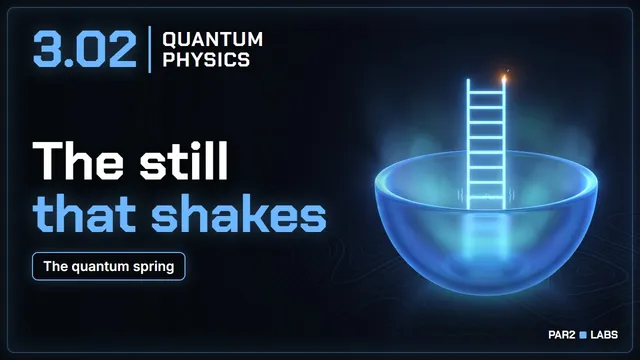
The Quantum Harmonic Oscillator: Energy Ladder and Zero-Point Motion
A swing the size of a molecule moves up only in whole steps, and even at its lowest energy it never stops shaking.
Coming
7 Dec
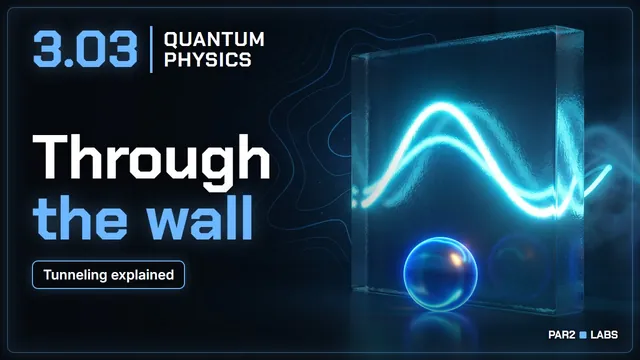
Quantum Tunneling Explained: How Particles Pass Through Walls
A ball cannot roll over a hill that is too tall, but an electron sometimes appears on the far side.
Coming
8 Dec
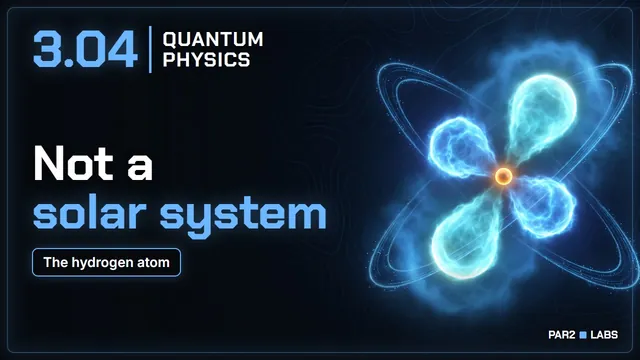
The Hydrogen Atom Explained: Orbitals, n, l, m and Energy Levels
An atom is not a tiny solar system.
Coming
9 Dec
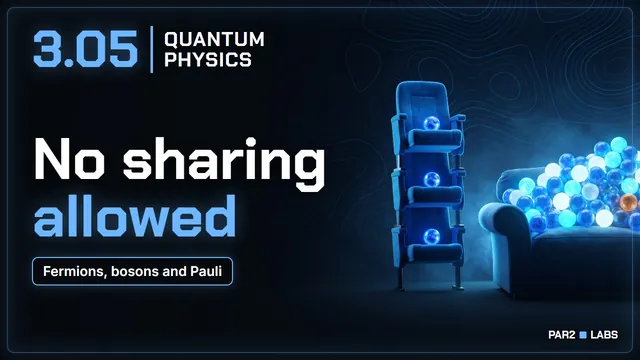
Pauli Exclusion Principle: Fermions, Bosons and Why Matter Is Solid
Two kinds of identical particles: those that refuse to share a seat (fermions) and those that crowd onto one (bosons).
Coming
10 Dec
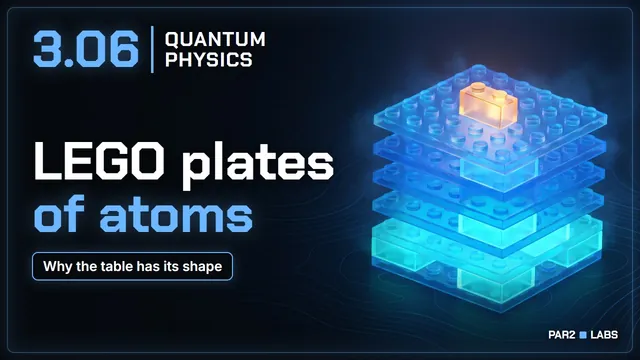
Many-Electron Atoms: Why the Periodic Table Has Its Shape
Why do the periodic table's rows have lengths 2, 8, 8, 18, 18, 32? This lesson builds every atom from the seats of hydrogen, the Pauli rule, shielding and penetration, explains the sawtooth in ionizat
Coming
11 Dec
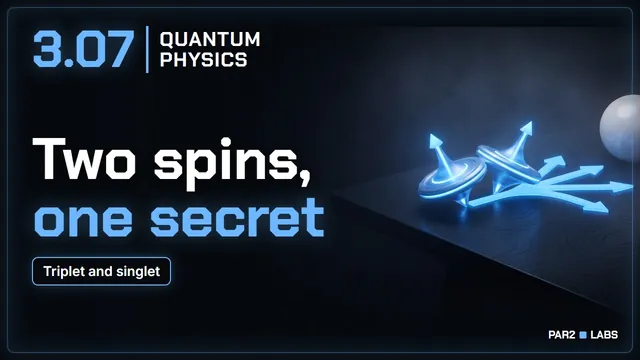
Angular Momentum and Adding Spins: Singlet vs Triplet
Rotation in the quantum world comes in steps.
Coming
12 Dec
Variational Principle and Perturbation Theory Explained Simply
Most quantum problems cannot be solved exactly, so physicists use two tools.
Coming
13 Dec
Energy Bands: Metals, Insulators, Semiconductors and Doping Explained
Why does a pencil lead conduct while a diamond does not? One atom has a staircase of energy levels; a crystal turns each step into a band, and whether a band is half full or full with a gap decides ev
Coming
14 Dec
How Lasers Work: Stimulated Emission and Population Inversion
Why does a laser pointer draw a tiny crisp dot while a torch spreads into a blur? This lesson treats light as a ladder of photon numbers, shows the three ways atoms and light trade energy (absorption,
Module 4 · 8 lessons
Entanglement
How separate quantum systems share one state, and why that sits at the heart of quantum computing.
0/8 live
Opens Tue 15 Dec · 6:30 PM IST
Coming
15 Dec
Tensor Product Explained: Why n Qubits Need 2^n Numbers
How many ways can thirty light switches be set? More than a billion, and that doubling is the secret behind quantum computing and the reason simulating quantum systems is so hard.
Coming
16 Dec
Quantum Entanglement Explained Simply: Bell States Step by Step
Two gloves in two boxes tell you nothing strange, but what if neither glove was chosen until you looked? This lesson builds entanglement from the tensor product, shows why a Bell pair has no state for
Coming
17 Dec
Bell's Theorem Explained: The CHSH Game and 2√2
Two kids play a game against a referee that no plan can win more than three times in four, yet two kids sharing entangled qubits win about eighty-five times in a hundred.
Coming
18 Dec
No-Cloning Theorem Explained: Why Quantum States Can't Be Copied
A photocopier copies any page, so why can't a machine copy a quantum state? This lesson proves the no-cloning theorem two ways, once with amplitudes and once with overlaps, shows the best approximate
Coming
19 Dec
Density Matrix Explained: Pure vs Mixed Quantum States
What is the state of a coin you pulled from a bag without looking? This lesson introduces the density matrix as a table that predicts everything, shows pure versus mixed states on the Bloch ball, expl
Coming
20 Dec
Decoherence Explained: T1, T2 and Why Big Things Look Classical
A whisper in a quiet room is clear, in a roaring crowd it is lost, not destroyed but spread everywhere.
Coming
21 Dec
The Measurement Problem: Copenhagen, Many Worlds, Pilot Wave
A magician makes a coin vanish and four people explain the trick four ways.
Coming
22 Dec
Quantum Entropy and Information: Von Neumann, Holevo, Ebits
How many yes-or-no questions does it take to find an animal, and what does that have to do with qubits? This lesson builds Shannon and von Neumann entropy from counting questions, shows that a Bell pa
Module 5 · 10 lessons
Quantum computing foundations
Qubits, gates and circuits, and why a quantum computer is not simply a faster ordinary one.
0/10 live
Opens Wed 23 Dec · 6:30 PM IST
Coming
23 Dec
Qubit Explained: From Bits to Qubits (Amplitudes with Signs)
Qubit explained from scratch: we start with a switch, a covered coin and a spinning coin, then show exactly how a qubit differs from a bit and from a probabilistic bit.
Coming
24 Dec
Quantum Gates Explained: X, Z, H, S, T as Bloch Sphere Rotations
Single-qubit gates explained as turns of the Bloch sphere: X, Z, H, S and T each become a rotation by a known angle about a known axis, and any gate is three rotations.
Coming
25 Dec
CNOT Gate Explained: Making Entanglement and Phase Kickback
CNOT, CZ and the Bell-pair circuit explained step by step: a controlled flip that works on superpositions is the gate that creates entanglement.
Coming
26 Dec
How to Read a Quantum Circuit: Wires, Gates and Matrices Step by Step
How to read a quantum circuit: wires, gates, controls and meters explained like a recipe card, then cooked by hand.
Coming
27 Dec
Reversible Computing and Quantum Oracles: Compute, Copy, Uncompute
Reversible computing and quantum oracles explained: why quantum gates cannot merge states, how AND becomes the Toffoli gate, how a function f becomes a reversible shuffle, and why you must uncompute s
Coming
28 Dec
Universal Quantum Gate Sets: Clifford+T, Solovay-Kitaev, Compiling
Universal quantum gate sets explained: why a few gates such as H, S, T and CNOT can build any quantum computation to any accuracy, what Solovay-Kitaev and modern synthesis say about cost, why T gates
Coming
29 Dec
Quantum Parallelism Myth: It Does NOT Try All Answers at Once
Does a quantum computer try all answers at once? No, and this lesson shows why with exact maths: one oracle call writes every pair x and f(x) into the state, but a measurement returns just one random
Coming
30 Dec
P vs NP vs BQP Explained: Where Quantum Computers Really Fit
P, NP, BQP and PSPACE explained simply: how computer scientists measure hardness by how cost grows, what is proven about where quantum computers fit (P ⊆ BPP ⊆ BQP ⊆ PSPACE), what is only believed, an
Coming
31 Dec
Stabilizer States and Clifford Circuits: Gottesman-Knill Explained
Stabilizer states and Clifford circuits explained from scratch: why a few Pauli strings can describe a huge entangled state, why H, S and CNOT circuits are classically easy (Gottesman-Knill), and why
Coming
1 Jan
How to Simulate a Quantum Computer on a Laptop (and Where It Breaks)
How to simulate a quantum computer on a classical machine: the 2^n memory wall, the reshape trick for applying gates, shot noise that shrinks like 1/sqrt(shots), and the shortcuts that make some circu
Module 6 · 15 lessons
Algorithms
The quantum algorithms that beat classical ones, from Deutsch-Jozsa to Shor and Grover.
0/15 live
Opens Sat 2 Jan · 6:30 PM IST
Coming
2 Jan
Deutsch–Jozsa Algorithm Explained: The First Quantum Speedup
How can a quantum computer decide in one look whether a hidden coin is fair or fake, when a careful normal computer needs two looks (and, for longer strings of bits, exponentially many in the worst ca
Coming
3 Jan
Simon's Algorithm Explained: Quantum Hidden Pattern Finding
A pile of socks, every sock has one twin, and every twin pair is linked by the same secret flip pattern.
Coming
4 Jan
Quantum Fourier Transform Explained: Circuit, Gates, Why It Works
How does your ear split a chord into notes, and how can a handful of quantum gates do the same trick on 2 to the n amplitudes? This lesson builds the quantum Fourier transform from spinning arrows, bi
Coming
5 Jan
Quantum Phase Estimation Explained: Reading a Rotation Speed
A wheel spins, you can only take snapshots, and each snapshot at double the waiting time reveals one more binary digit of the speed.
Coming
6 Jan
Shor's Algorithm Explained: How Quantum Computers Break RSA
A hand on a fifteen-hour clock repeats after four steps, and that repeat length hides the factors of fifteen.
Coming
7 Jan
Grover's Algorithm Explained: Quantum Search, Step by Step
How can a quantum computer find one item among a million boxes in about 785 steps instead of 500,000? This lesson shows Grover's algorithm as a compass needle turned by two mirrors: the oracle reflect
Coming
8 Jan
Amplitude Estimation Explained: Quantum Counting and Monte Carlo
How can a quantum computer estimate a probability, like the fraction of red marbles in a jar, with error shrinking as one over the cost instead of one over its square root? This lesson combines Grover
Coming
9 Jan
Quantum Walks Explained: Why a Quantum Walker Spreads Faster
A drunk walker spreads like the square root of the number of steps, but a quantum walker that interferes with its own paths spreads in proportion to the number of steps.
Coming
10 Jan
Hamiltonian Simulation Explained: Trotter and qDRIFT
How does a small machine of qubits pretend to be a molecule? This lesson builds Hamiltonian simulation from one idea: draw nature one tiny frame at a time.
Coming
11 Jan
HHL Algorithm Explained: Quantum Linear Systems and Fine Print
Can a quantum computer solve a million equations at once, and can you see the answer? This lesson derives the HHL quantum linear systems algorithm step by step (phase estimation, controlled rotation b
Coming
12 Jan
VQE Explained: Variational Quantum Eigensolver From Scratch
How do you find the lowest point of a valley in the fog? This lesson builds VQE, the Variational Quantum Eigensolver, from the variational principle: a circuit with adjustable angles, an energy measur
Coming
13 Jan
QAOA and Quantum Annealing Explained: MaxCut Step by Step
How do you split a class into two teams with the fewest arguments, and can a quantum computer do it faster? This lesson turns optimisation into a lowest-energy question, then builds quantum annealing
Coming
14 Jan
Quantum Machine Learning Explained: What Is Real and What Is Hype
Can a quantum computer sort beads better with a magic ruler? This lesson explains quantum kernels, feature maps and variational classifiers from first principles, then walks through the real obstacles
Coming
15 Jan
QSVT Explained: One Idea Behind Many Quantum Algorithms
Do you need a different key for every lock? Quantum singular value transformation, QSVT, is a master key behind search, phase estimation, Hamiltonian simulation and matrix inversion.
Coming
16 Jan
Quantum Algorithm Zoo: What Really Speeds Up, and By How Much
If quantum computers are so fast, how fast, and at what? This lesson draws the whole zoo: exponential, polynomial and quadratic speed-ups, the problems with none, and the four asterisks to check on ev
Module 7 · 10 lessons
Errors and hardware
Why quantum states are fragile, how error correction fights back, and what the hardware looks like.
0/10 live
Opens Sun 17 Jan · 6:30 PM IST
Coming
17 Jan
Quantum Noise Explained: Bit Flips, Phase Flips, T1 and T2
Why do quantum computers make mistakes? This lesson builds the catalogue of quantum errors from a simple whispering game: bit flips, phase flips, depolarising noise, T1 and T2 decay, leakage and gate
Coming
18 Jan
Quantum Error Correction Explained: The Three-Qubit Code
How can a quantum computer fix a mistake when it cannot copy a qubit or look at it? This lesson builds the three-qubit bit-flip code from a simple three-friends vote: encoding, syndrome measurement wi
Coming
19 Jan
Shor Code and CSS Codes Explained: Two Nets for Quantum Errors
How do you protect a qubit from both bit flips and phase flips at once? This lesson builds the nine-qubit Shor code from two simple three-qubit votes, explains stabilisers, code distance and the [[n,k
Coming
20 Jan
Surface Code Explained: Quantum Error Correction on a Grid
How will quantum computers survive their own mistakes? This lesson explains the surface code, the leading error-correcting design: a quilt of data and measure qubits where a torn stitch lights up only
Coming
21 Jan
Fault Tolerance, Threshold Theorem and Magic States Explained
How do you compute on protected qubits without letting one mistake spread? This lesson explains fault-tolerant gates, transversal operations, the Eastin-Knill limit, why the T gate needs magic states,
Coming
22 Jan
Quantum Computer Hardware Explained: Five Ways to Build a Qubit
How do you actually build a qubit? This lesson tours the hardware zoo: superconducting transmons, trapped ions, neutral atoms in optical tweezers, photons and spins in silicon.
Coming
23 Jan
Topological, Cat, GKP and Dual-Rail Qubits Explained
Can hardware protect qubits so error correction gets cheaper? This lesson covers four ideas: anyons and braiding, cat qubits with exponentially rare bit flips, GKP combs that measure small slips, and
Coming
24 Jan
Quantum Advantage Claims: How to Read Benchmarks (NISQ, XEB)
Is that quantum advantage claim real? This lesson explains NISQ, quantum volume, heavy outputs, cross-entropy benchmarking, random circuit sampling, why classical rivals keep catching up, and a six-po
Coming
25 Jan
Quantum Resource Estimation: What Does an Application Cost?
How many qubits does a useful quantum computer really need? This lesson teaches resource estimation step by step: logical qubits, T and Toffoli counts, the error budget, code distance, surface-code ov
Coming
26 Jan
Quantum Programming Lab: Qiskit, Cirq, PennyLane for Beginners
Build and run quantum circuits tonight, for free.
Module 8 · 7 lessons
Quantum technology
Quantum cryptography, sensing, clocks and other technology already built from these rules.
0/7 live
Opens Wed 27 Jan · 6:30 PM IST
Coming
27 Jan
BB84 Quantum Key Distribution Explained: A Key Nobody Can Spy On
Quantum key distribution lets two people share a secret key where a spy cannot hide: reading the message changes it, and the change shows up as errors.
Coming
28 Jan
Post-Quantum Cryptography Explained: Lattices, Hashes and Migration
Why would you change every lock in town before the thief has a key? Because encrypted data is being collected today.
Coming
29 Jan
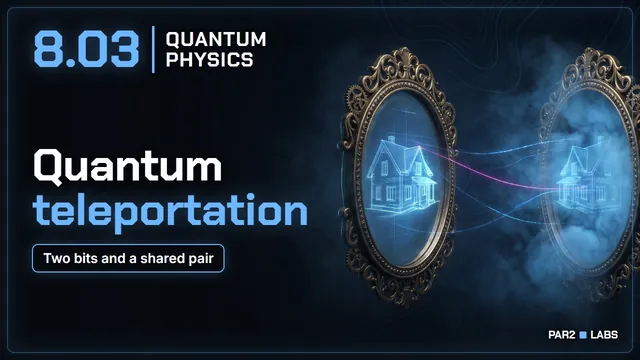
Quantum Teleportation Explained: Bell Pairs, Repeaters, Swapping
Can you send a drawing without sending the drawing? This lesson teleports a quantum state with a shared Bell pair and two classical bits, shows why it cannot beat the speed of light, runs superdense c
Coming
30 Jan
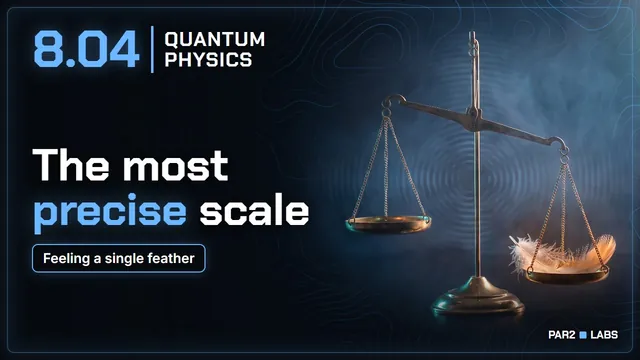
Quantum Sensing Explained: Ramsey, Squeezing and the Heisenberg Limit
How could you tell that a single feather landed on a bridge? This lesson shows how a qubit's phase turns tiny fields and forces into numbers, why independent probes are limited to one over root N, how
Coming
31 Jan
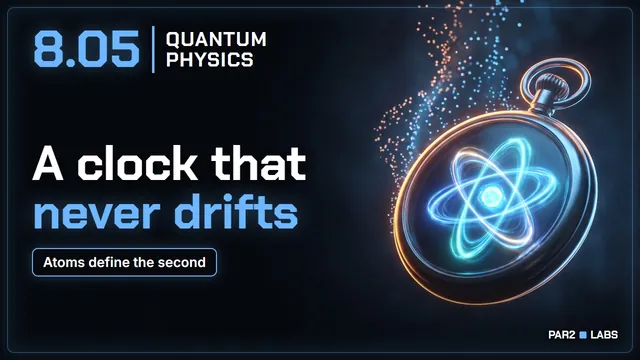
Atomic Clocks Explained: Ramsey Fringes and the Definition of a Second
How does a clock know how long a second is? A pendulum drifts with temperature, but an atom is identical everywhere.
Coming
1 Feb
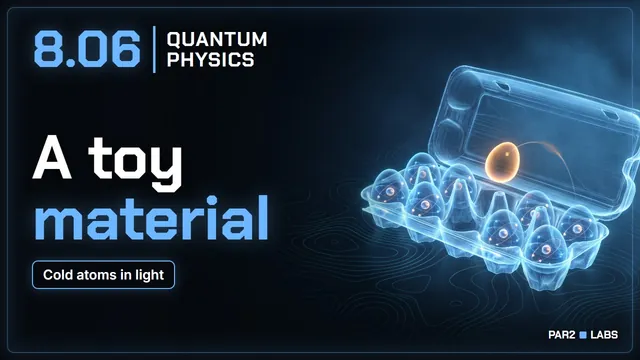
Analog Quantum Simulators: Cold Atoms, Optical Lattices and Tweezers
What if you could build a tiny toy copy of a material and poke it? This lesson builds quantum simulators from laser light and cold atoms: optical lattices and the Hubbard model, the superfluid to Mott
Coming
2 Feb
Quantum Randomness and Certified Trust: Prove a Dice Is Fair
How do you know a dice is fair, not secretly loaded? Statistical tests can reject a bad source but never prove a good one.
Module 9 · 10 lessons
Research-grade quantum
Reading papers, checking claims and finding open problems, the way researchers work.
0/10 live
Opens Wed 3 Feb · 6:30 PM IST
Coming
3 Feb
How to Read a Quantum Paper and Spot Weak Speedup Claims
How do you tell a real quantum speedup from a magic trick with a hidden string? This lesson gives a five-question checklist, input, output, currency, opponent and hidden factors, and applies it to Gro
Coming
4 Feb
Query Complexity: Why Grover's Search Cannot Be Beaten
How do you prove that no algorithm, however clever, can be faster than a speed limit? This lesson proves that Grover's square-root search is optimal with a four-step hybrid argument, previews the poly
Coming
5 Feb
The Design Patterns of Quantum Algorithms: Seven Reusable Tools
Every quantum algorithm is built from a few reusable tools: phase kickback, Fourier sampling, amplitude amplification and estimation, quantum walks, Hamiltonian simulation, block-encoding, and variati
Coming
6 Feb
How to Invent a New Quantum Algorithm: A Six-Gate Recipe
A step-by-step recipe for inventing quantum algorithms: state the problem with structure, find a hidden symmetry, arrange interference, cost the input and output, name the best classical rival, then p
Coming
7 Feb
Dequantization: How Classical Algorithms Catch Quantum Speedups
Why did a famous quantum speedup for recommendation systems disappear in 2018? This lesson shows the idea behind dequantization: give the classical tortoise the same shortcut, L2 sampling access, as t
Coming
8 Feb
How to Test a Quantum Result: The Seven-Rung Verification Ladder
How do you know a quantum result is real? This lesson gives a seven-rung verification ladder: parse, conservation checks, small exact simulation, classical baseline, resource estimate, bounds and riva
Coming
9 Feb
Spin Echo, Ramsey and Decoupling: How Quantum Techniques Are Invented
How were Ramsey fringes, the spin echo and dynamical decoupling invented? This lesson turns them into a recipe you can reuse: name the error, find a control that cancels it, check what it breaks, opti
Coming
10 Feb
Tensor Networks, Symmetry and Lie Algebras: Make Hard Problems Small
Three theory tools decide whether a quantum problem is hard, trainable or already easy: low entanglement (matrix product states), symmetry (smaller blocks) and the dimension of the dynamical Lie algeb
Coming
11 Feb
Using Claude and AI to Discover Quantum Algorithms (and Verify Them)
How do you work with an AI assistant on quantum algorithms without being fooled? This lesson gives a workflow (specify, ask, parse, simulate, baseline, attack, log) and three worked checks: gate ident
Coming
12 Feb
Open Problems in Quantum Computing: Where Discovery Is Likely
What is still unknown in quantum computing, and where could you contribute? This lesson maps what is proven (BQP, PSPACE, oracle separations), five live open problems (new speedups, chemistry error bu
Module 10 · 12 lessons
Quantum for life
Quantum physics in nature, energy, food, health and materials, and how it shapes the world around us.
0/12 live
Opens Sat 13 Feb · 6:30 PM IST
Coming
13 Feb
Quantum Biology: Photosynthesis, Smell and Bird Compasses
Is a robin's compass made of quantum physics? We tour three places where life might use the rules of this course: energy hopping in leaves, tunnelling in enzymes, and the radical-pair compass in bird
Coming
14 Feb
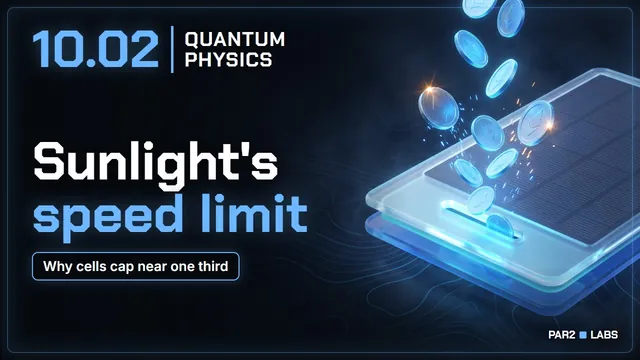
Solar Cell Efficiency Limit Explained: Band Gap and Quantum Dots
Why can one layer of silicon never turn more than about a third of sunlight into electricity? Think of sunlight as coins and a solar cell as a slot that only takes coins of a minimum size, then build
Coming
15 Feb
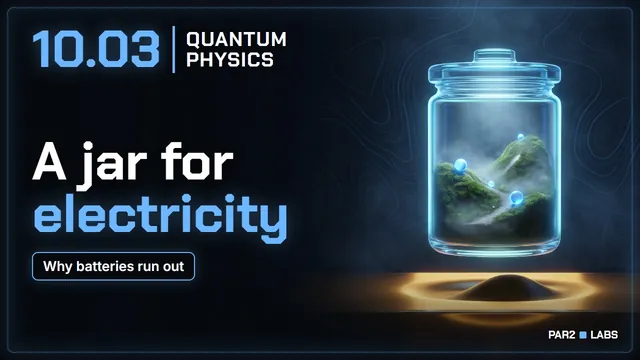
Quantum Computing for Batteries and Catalysts: What's Real
Why does a phone battery die by evening? A battery is two hills for electrons, and this lesson builds the real physics of voltage, capacity, the protective skin, catalysts and green hydrogen, with the
Coming
16 Feb
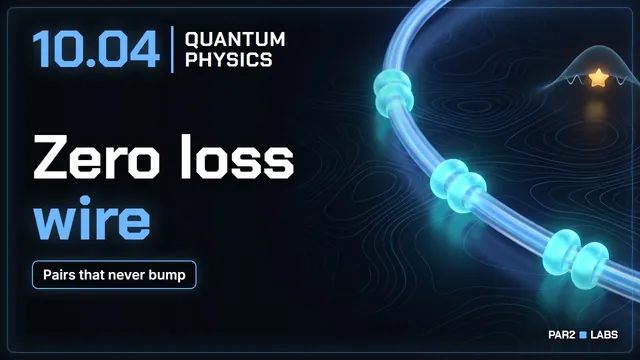
Superconductors and Fusion: The Quantum Physics of Zero Loss
What if electricity never lost anything on the way? Starting with people dancing in a conga line instead of bumping through a crowded corridor, we build Cooper pairs, the energy gap and zero resistanc
Coming
17 Feb
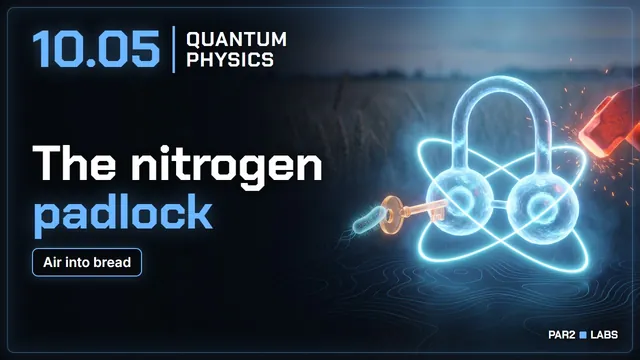
Nitrogenase and FeMoco: Can Quantum Computers Fix Fertilizer?
Half the world eats food grown with nitrogen pulled from the air in a hot, high-pressure factory, while a soil bacterium does it at room temperature.
Coming
18 Feb
Photosynthesis Efficiency and Rubisco: Where Crops Lose Energy
A leaf is a solar panel that grows itself, yet a cornfield uses only about one percent of sunlight.
Coming
19 Feb
Quantum Sensing for Food: How Light Hears Molecules
How do you find melamine in milk powder, or a mould toxin in grain, without tasting it? Food molecules ring like tiny bells, and light can hear them.
Coming
20 Feb
Quantum Computing and Drug Design: What Is Real?
How do you design a key for a lock you cannot see? A medicine is a small molecule that must stick to one protein.
Coming
21 Feb
Quantum Optimisation: Logistics, Grid and Finance, Honestly
A delivery truck with 25 stops has about 3 times 10 to the 23 possible routes.
Coming
22 Feb
Where Does Quantum Actually Win? A Seven-Door Checklist
A stranger says a quantum computer will revolutionise your business.
Coming
23 Feb
Capstone: Write a One-Page Case for a Quantum Application
If you could invent one quantum machine to help feed the world, how would you prove it is worth building? This capstone walks through a full worked case for an ammonia-catalyst simulation: the questio
Coming
24 Feb
Build a Quantum Chemistry Simulator in Python: H2 with VQE
Can you build the smallest honest quantum chemistry calculation on your own laptop, and prove it works? This capstone writes a density-matrix simulator from scratch, computes the hydrogen molecule fro
New lessons every week
Learn what the model sees.
106 free lessons on the PAR2 LABS YouTube channel. New lessons every day at 6:30 PM IST.